


Meta Title: Best Sherwin-Williams Paint Colors to Transform Your Home | Designer Picks
Meta Description: Discover the best Sherwin-Williams paint colors designers recommend—Rhythmic Blue, Basque Green, Jasper, Armory, Iron Ore, Lightweight Beige, and Alabaster—plus room-by-room tips, finishes, and sampling advice.
Focus keyword: Sherwin-Williams paint colors
Introduction
Choosing the right Sherwin-Williams paint colors can change a room’s mood without a major remodel. Trusted by designers for quality, accessibility, and up-to-date color technology, Sherwin-Williams offers versatile options that stand the test of time. Below are seven designer-loved shades, why they work, the best rooms and finishes to use them in, and practical tips for sampling and application.
H2: Why designers choose Sherwin-Williams paint colors
Sherwin-Williams combines decades of paint expertise with widely available products and modern color tools, making it a go-to for both pros and weekend DIYers. For tools and color visualization, try Sherwin-Williams’ ColorSnap Visualizer. For store locations and in-person color help, use the Sherwin-Williams store locator.
H2: Top Sherwin-Williams paint colors (designer favorites)
H3: Rhythmic Blue — soft, warm blue for sunlit rooms
Why designers love it: A gentle blue with warm undertones, Rhythmic Blue brings a soft, inviting glow in rooms that get morning or golden-hour light.
Best rooms: Dining rooms, bedrooms, and sunrooms benefit from this tone.
Finish & tips: Use a satin or eggshell finish to reflect light softly. Test a 12″ x 12″ swatch on the wall and view it at different times of day.
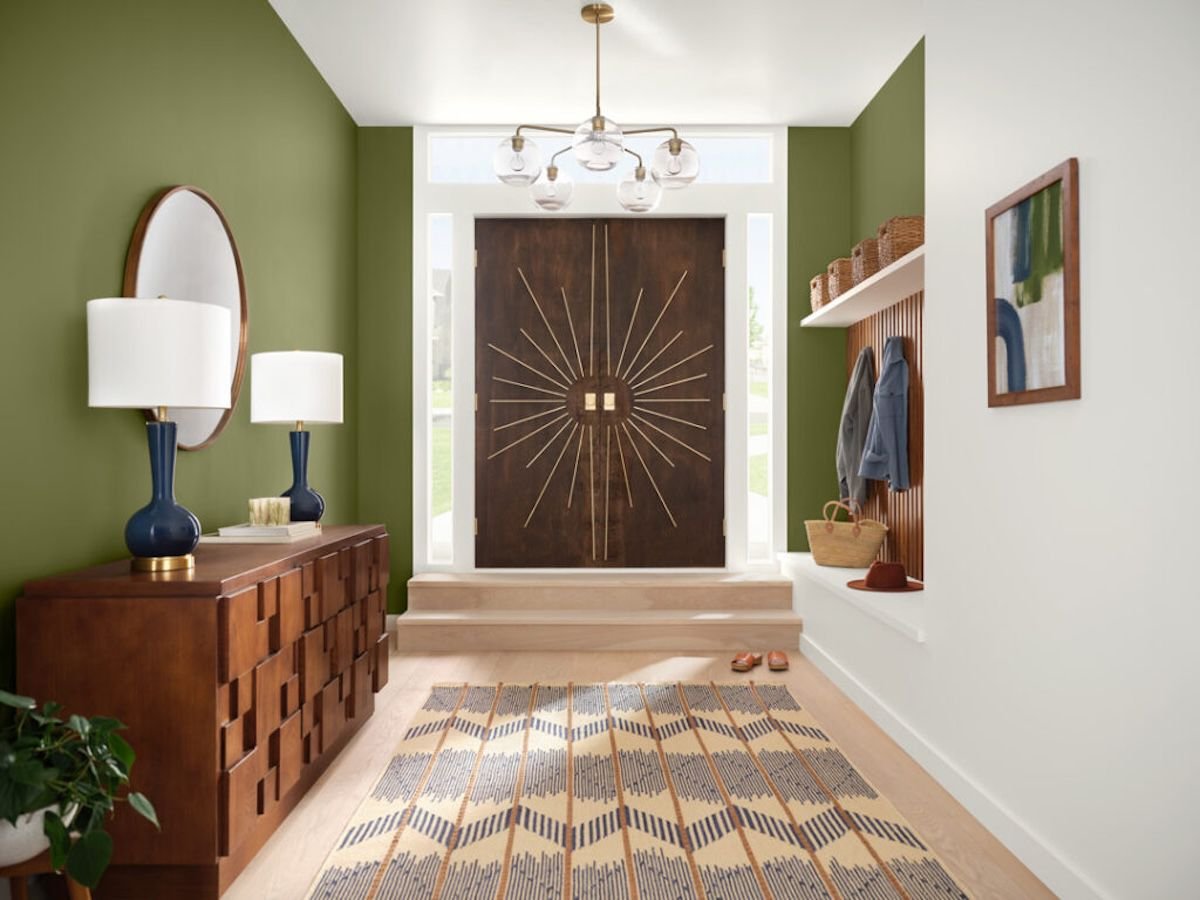
H3: Basque Green — rich, warm green for millwork and trim
Why designers love it: Basque Green reads as a lush, warm green that pairs especially well with natural wood and foliage-inspired palettes.
Best rooms: Millwork, cabinetry, ceiling treatments, and feature walls.
Finish & tips: Satin-enamel on millwork makes the color feel finished and intentional. Consider pairing with neutral walls to let the green stand out.
H3: Jasper — deep green for classic, moody cabinetry
Why designers love it: Jasper is a deep green with cool undertones that can appear almost-black in low light—ideal for creating dramatic yet sophisticated cabinetry.
Best rooms: Kitchen cabinets, bathroom vanities, or library built-ins.
Finish & tips: Satin-enamel or semi-gloss works well on cabinetry for durability and subtle sheen. Sample large panels to understand how Jasper reads in your lighting.
H3: Armory — warm alternative to black for trim or doors
Why designers love it: Armory is a dark brown that provides drama without the starkness of pure black—perfect when you want depth with warmth.
Best rooms: Window trim, exterior doors, garage doors, and accent trim.
Finish & tips: Satin finish reduces harshness while maintaining visual weight. Use it to ground light palettes or add contrast to textured exteriors.
H3: Iron Ore — cozy charcoal that reads warm, not goth
Why designers love it: Iron Ore is a rich charcoal-gray with warm pigment—dark and enveloping but still welcoming.
Best rooms: Home offices, libraries, family rooms, and feature walls.
Finish & tips: Flat or matte finishes give a plaster-like feel for lounging spaces; pair with plush fabrics and warm wood tones for a cozy retreat.
H3: Lightweight Beige — neutral with a hint of sophistication
Why designers love it: A warm tan with a subtle pink undertone, Lightweight Beige elevates neutral schemes with nuanced depth.
Best rooms: Ceilings, doors, trim, or an entire room for a soft, sophisticated envelope.
Finish & tips: Use throughout a space for a cohesive look; consider eggshell for walls and semi-gloss for trim.
H3: Alabaster — a creamy, versatile white
Why designers love it: Alabaster is a creamy white that reflects natural light while providing a soft, plaster-like backdrop for architecture and furnishings.
Best rooms: Mediterranean, Scandinavian, or minimalist interiors; great for entire rooms, trim, and ceilings.
Finish & tips: Flat finishes mimic lime wash or polished plaster; use satin for trim to add subtle separation.
H2: How to pick the right Sherwin-Williams paint color for your space
– Assess lighting: Always test paint samples on multiple walls and check them at different times (morning, midday, and evening).
– Consider undertones: Warm whites and beiges may have pink or yellow undertones—compare swatches alongside your furnishings.
– Match finishes to function: Use durable semi-gloss or satin on high-touch surfaces like doors and millwork; choose flat or matte for low-traffic walls where a soft look is desired.
H2: Sampling, tools, and purchasing
– Order sample pots or peel-and-stick swatches to see scale and texture before committing. Sherwin-Williams offers sample sizes and a visualizer tool.
– Use the ColorSnap Visualizer to test colors on photos of your own rooms.
– For professional help or touch-ups, visit a Sherwin-Williams store to discuss sheens, primers, and application tips.
H2: Quick painting tips for lasting results
– Prime first on bare or repaired surfaces to ensure true color and even coverage.
– Choose the right brush or roller nap for your surface (smooth surfaces need shorter naps; textured walls benefit from longer naps).
– Allow paint to cure fully before heavy use—this improves durability and reduces visible wear.
H2: Final thoughts
Sherwin-Williams paint colors offer a reliable mix of classic neutrals, moody darks, and warm greens and blues that designers repeatedly choose for their longevity and versatility. Whether you’re refreshing trim in Armory or enveloping a room in Alabaster, sampling in your home’s light and selecting the right finish are the keys to a beautiful, lasting paint job.
External resources
– Sherwin-Williams official site and ColorSnap Visualizer: https://www.sherwin-williams.com/
– Sherwin-Williams store locator: https://www.sherwin-williams.com/find-a-store
– Painting techniques and tips from This Old House: https://www.thisoldhouse.com/painting
– Room and color inspiration at Better Homes & Gardens: https://www.bhg.com/rooms/
Ready to pick your shade? Try ordering samples from Sherwin-Williams and testing them in different lighting to see which of these designer favorites works best in your home.
